| arctg(3x) | |
= 2 | |
| arctg(2x) |
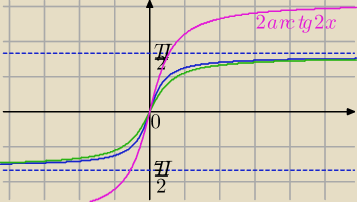 Pomnożyć możesz przez mianownik.
wg mnie brak rozwiązań .
arctg(2x)≠0
Pomnożyć możesz przez mianownik.
wg mnie brak rozwiązań .
arctg(2x)≠0
| 1 | ||
z kolei autor zadania podaje, że odpowiedź to: +/− | ||
| √3 |
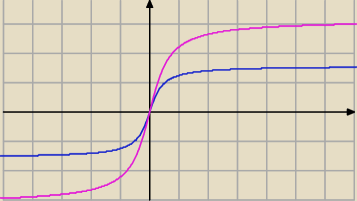
| √3 | π | |||
L=arctg(3* | )=arctg(√3)= | |||
| 3 | 3 |
| √3 | 2√3 | |||
P=2*arctg(2* | )=2*arctg( | ) | ||
| 3 | 3 |
| arctg(3x) | |
=2 i cosx≠0 i cos2x≠0 ⇒ arctg(3x) = 2arctgx(2x) ⇔ | |
| arctg(2x) |
| 2tg(arctgx) | ||
⇔ tg(arctg(3x)) = tg(2arctg(2x)) ⇒ 3x = | ⇒ | |
| 1−(tg(arctgx)2 |
| 2x | ||
⇒ 3x = | ⇒ 3x(1−x2) = 2x i x≠0 z założenia ⇒ 3−3x2 = 2 ⇔ | |
| 1−x2 |
| 1 | 1 | |||
⇔ 3x2= 1 ⇔ x2 = 13 ⇔ |x|= | ⇔ x= ± | . ...  | ||
| √3 | √3 |
