Janek191:
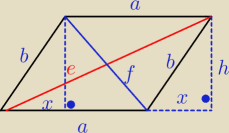
Mamy
( a − x)
2 + h
2 = f
2
( a + x)
2 + h
2 = e
2
a
2 − 2a x + x
2 + h
2 = f
2
a
2 + 2a x + x
2 + h
2 = e
2 ; odejmujemy stronami
4a x = e
2 − f
2
−−−−−−−−−−−−−
oraz
h
2 = f
2 − ( a − x)
2
h =
√ f2 − ( a − x)2
−−−−−−−−−−−−−−−−−−−
Pole równoległoboku
P = a*h = a*
√ f2 − ( a − x)2
======================
Mamy też
b
2 = x
2 + h
2 = x
2 + f
2 − ( a − x)
2 = x
2 + f
2 − ( a
2 −2a x + x
2) = f
2 − a
2 +2a x
b =
√ f2 − a2 + 2a x
−−−−−−−−−−−−−−−−−−−
Obwód równoległoboku
L = 2 a + 2 b = 2 a + 2
√f2 − a2 + 2a x
===============================